Tagged: social media marketing
The Do’s and Don’ts of Celebrating Pride in 2026
- by Luke Thiessen
In 2026, Pride is as much a statement as it is a celebration. With changing geopolitical attitudes towards Pride, attacks by the American President on D.E.I., and a rise in alt-right conservative values, Pride is under pressure from more angles than ever before. That makes how we celebrate Pride more important than ever, too.
Showing up for the queer community can't stop at a rainbow flag emoji or a single Instagram post. Pride celebrations and acknowledgements should be authentic, genuinely supportive, and action-forward. Performative gestures that generate good optics without creating real change don't cut it anymore.
Here's a quick cheat sheet to help you make sure your Pride celebrations are actually worth celebrating.
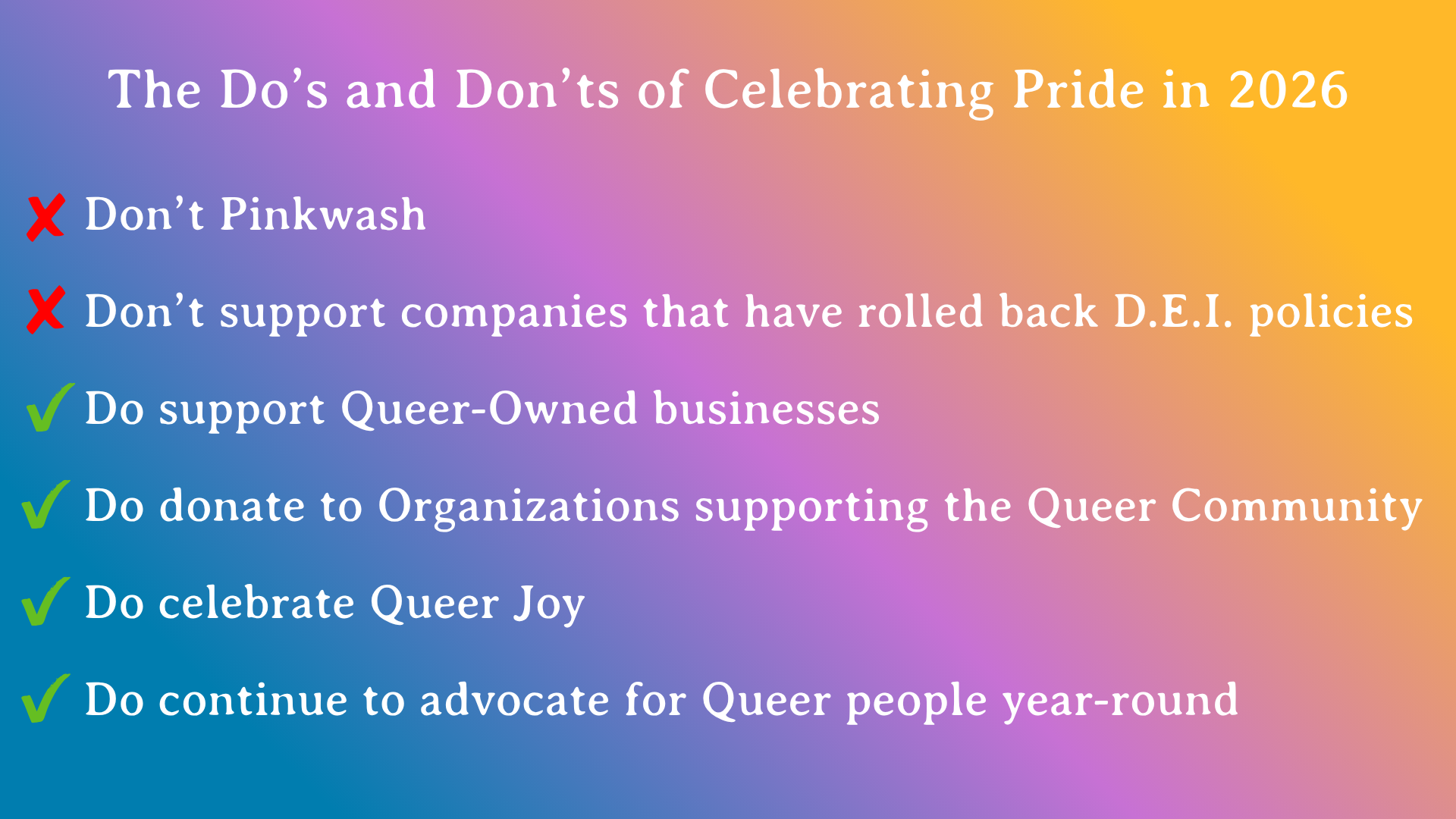
Don’t Pinkwash
The practice of pinkwashing (or rainbow-washing) means using 2SLGBTQIA+ symbols or messaging for public relations or profit without providing real support to the queer community. Think of it as paying lip service to Pride without backing it up.
You've seen it before: a company swaps its logo for a rainbow version every June, or sends a float to the local Pride parade, then goes radio silent the other eleven months of the year. These gestures aren't inherently bad, but they need to reflect the organization's actual values (and last longer than one month).
If you’re slapping a rainbow logo on your social media pages, you best be backing it up with actual policy changes, charitable giving, advocacy, and creating real space for 2SLGBTQIA+ employees and customers.
Otherwise, it’s performative — and people notice.
Don’t support companies that have rolled back D.E.I. policies
It’s been a tough few years for Diversity, Equity, and Inclusion.
In 2025, Trump issued a sweeping directive to attempt to ban D.E.I. programs at the federal government and its contractors. It placed D.E.I. workers on paid leave, shut down agency diversity offices, and revoked decades-old executive orders that previously required affirmative action.
Since then, a startling number of businesses worldwide have followed suit and dismantled D.E.I. programs that protect queer people and other marginalized groups. It’s a bad look, and these companies don’t deserve your business or your loyalty.
On the other hand, many companies are fighting back and doubling down on their DEI efforts, like Lush, Delta, and Costco. Vote with your wallet and support the organizations fighting for a more inclusive world.

Do support Queer-Owned businesses
Speaking of voting with your wallet, Pride Month is the perfect time to be extra intentional about supporting queer-owned businesses. Supporting a local queer-owned business with a purchase sends your dollars straight back into the community and is one of the most direct and impactful things you can do.
If your budget is tight, there are other ways to support queer-owned businesses. Try attending one of their events, sharing their social media or website with others, volunteering with them, or letting them know how much they mean to the community.
Luckily, for us in Manitoba, there are many incredible queer-owned businesses to support. Check out the Rainbow Pages for a comprehensive list of local businesses, or the Canadian Queer Chamber of Commerce’s list of Rainbow Registered businesses nationwide.
Save ‘em, share ‘em, and use ‘em year-round.
Do donate to Organizations supporting the Queer Community
There are incredible organizations doing vital, life-changing work for queer people every single day, and many of them are underfunded and under-resourced, especially right now.
Locally, we love the work that Sunshine House Winnipeg and the Rainbow Resource Centre do in supporting 2SLGBTQIA+ adults and youth. The Rainbow Resource Centre has a nice roundup of other Manitoba 2SLGBTQIA+ organizations here. Or, look into national and international organizations that advocate for queer rights, provide crisis support, fund legal battles, and amplify queer voices.
If you're able to donate or volunteer your time, your support makes a real difference.
Do celebrate Queer Joy
Whether you’re a queer person or an ally, a big part of Pride Month is celebrating queer joy. With so much hate and oppression in the world today, joy is more important than ever. Try attending Pride events, consuming queer media, celebrating Pride with loved ones, or finding special ways to celebrate the queer people in your life. Let them know you see them, you're proud of them, and you're glad they exist.
As poet Toi Derricotte wrote, “Joy is an act of resistance.”
In times like these, choosing to celebrate loudly, proudly, and with full hearts is a radical and necessary act.
Do continue to advocate for Queer people year-round
Here's the thing about Pride — it's one month, but the work doesn't stop on July 1st.
The policies that threaten queer people don't take a break, and the organizations supporting them need funding all year. The queer people in your life need your allyship in February just as much as they need it in June!
Commit to carrying your Pride Month energy forward. Follow queer-led organizations, stay informed on 2SLGBTQIA+ legislation, vote for politicians who protect queer rights, and speak up when you witness discrimination. Keep showing up and helping to make the world a safer, more tolerant place.
Do Social Media Trends Really Help My Marketing?
- by Luke Thiessen
We love a good social media trend.
What could be better than noticing a new trend or format in its early stages – especially one that fits perfectly with your brand – and jumping on it quickly, then seeing it take off and boost everything from your follower count to views and engagement?
That’s the high most of us marketers are chasing a lot of the time. We know we can’t hit that with every post, but it sure feels good when it works, and the numbers make us look even better. But is it worth it?
I won’t leave you hanging here; the short answer is yes – but with some significant caveats.
Let’s look at some data, explore how and when to chase that trend for best results, and maybe even when to let the trend pass you by.
How to capture the moment
There are two main things to consider when deciding whether to jump on a social media trend: timing and fit.
Timing is crucial on several fronts. Most social media trends have a pretty short shelf life, and many users – especially your younger audience – respond negatively to brands posting old or “stale” trends. By the time you’ve noticed the trend, chances are good it’s already past the halfway point to becoming stale. Even if you have caught something fairly early, you’ve really only got a few days at most before your take on it feels too late or irrelevant.
There are some exceptions to this, especially with more niche and industry-specific trends, which tend to move more slowly and have a longer shelf life. And if your audience or follower base leans a little older, this can shift your window and give you a little more time as well.
Another reason timing matters is that you may have other time-sensitive content in the works or in your content schedule, so dropping everything to chase a trend might be a trade-off with more risk than reward. So, consider what it will take to make your trend-chasing post, as well as what you might be sacrificing to make that happen.
If you have caught a trend early enough and the timing feels good, the other thing to consider is fit: does this particular trend feel appropriate for your brand and your audience?
It’s important to remember that while a given social media trend might be popular with certain groups and online communities – maybe even ones you belong to personally – that doesn’t mean it will be familiar or relevant to your brand’s followers. You should also consider your brand’s online personality and image, and whether a given trend would damage or take away from that in any meaningful way.
The potential benefits
The main argument in favour of chasing social media trends is that the algorithms – especially on platforms like Instagram and TikTok – prioritize content that uses trending audio, hashtags and formats. They also value certain types of engagement more highly than others, especially shares – meaning if a user finds a post funny or relatable and sends it to a friend, they will reward you for it in the algorithm.
If you manage to make something that captures a trend well, at the right time and in the right way, you also have a much better chance of making it onto people’s “for you” and “discover” pages, and ultimately going viral. More than two-thirds of videos on TikTok are viewed from the “for you” feed (versus “following”), so breaking outside of your follower base is a huge benefit of going even slightly viral, and can often grow your follower count noticeably in a very short period.
The challenges and pitfalls
For all the benefits of posting a video or reel that goes viral, there is evidence that it’s getting harder to do, and that the results can sometimes be counterproductive.
After rapid growth in 2024, Instagram Reels saw a decline in overall reach and impressions last year (down by more than a third in 2025). A report last year from Sprout Social also found that one-third of consumers feel that brands jumping on social media trends is “embarassing,” and another quarter feel it’s only effective within 24 to 48 hours of a trend’s beginning.
Perhaps most significantly, research shows the longer-term effects of going viral on social media are neutral or even net-negative for many brands. Engagement tends to drop sharply within days of a viral post, often dipping below what it was beforehand, and despite an increased follower count, a viral post doesn’t seem to improve engagement for a brand at all. The researchers in this particular study suggest that, according to the data, consistent high-quality content over the long term is more likely to lead to stable growth and engagement.
My post went viral, now what?
When you have a post go viral, there are some things you can do to take better advantage of the moment and to mitigate some of the inevitable post-viral slump.
Posting again shortly after the peak of a viral post is helpful, as well as prioritizing high-engagement types of content for a time. On Instagram, carousels have become one of the best post formats for engagement and algorithmic performance, so consider making your next post a carousel.
Another thing to do is adjust your expectations. Going viral is unpredictable, and despite your past success and best efforts, you may not do it again, or at least not right away. Many brands who gain followers with a viral post will also lose up to one-third of those new followers within a month. Recognize the data around your viral post to be an outlier, and continue working toward sustainable growth.
We can help
If you haven’t heard by now, social media content and data are kind of our thing, and we’d love to help your brand maximize its online presence. If you need someone to help your brand build a strong and engaged following online, and maybe even make some viral content along the way, get in touch for a free discovery call today!
4 Things You Need To Know About TikTok Shop
- by Luke Thiessen
Social media giant TikTok has innovated and changed a lot about how we use the internet, and increasingly, that includes shopping.
Given its simple, streamlined structure of feeding videos to users, TikTok may not seem like the most likely app to become a one-stop shop for everything on the internet, but – mostly thanks to a huge Gen Z userbase – that’s exactly where it is heading. Research shows that younger people are increasingly using social media (especially TikTok) in place of search engines, and now, in place of “traditional” online stores and e-commerce.
The app was already carving out a niche as a place for influencers to recommend products, with popular trends and hashtags like #TikTokMadeMeBuyIt driving sales even before businesses could sell anything directly on the app. Then in September of 2023, TikTok announced the worldwide rollout of TikTok Shop, its in-app shopping platform powered by Shopify.
Whether you’re a business looking for another sales avenue, or a TikTok user and customer curious about the platform, here are four things you need to know about TikTok Shop.
1. It’s more popular than you might think
TikTok itself has been one of the fastest-growing social media platforms since its launch, but its sales platform has proven even more immediately popular. Less than two years in, one U.S. survey shows 37% of Americans under 60 have purchased something on TikTok Shop.
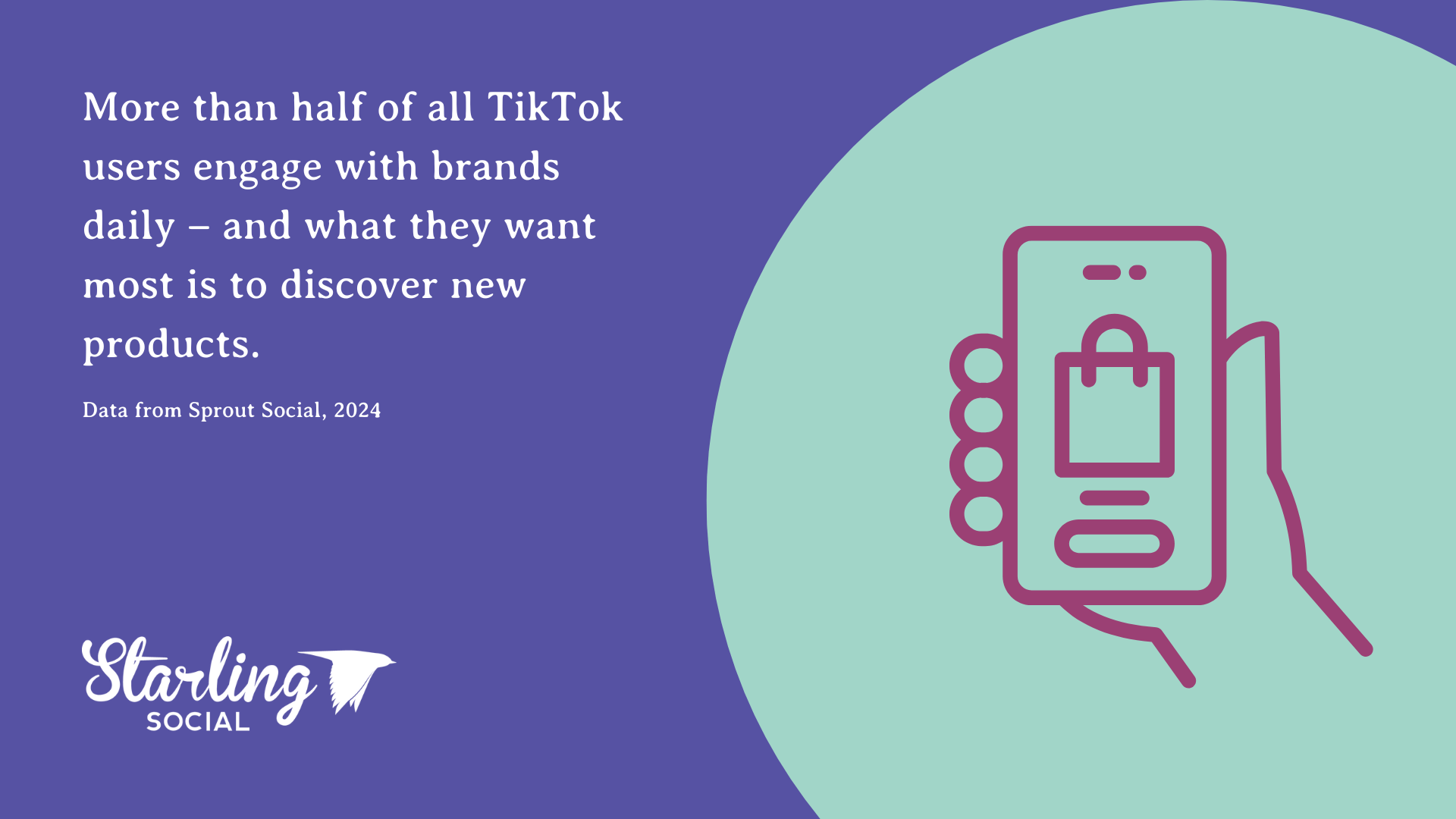
Other data suggests that only between a quarter and a third of marketers are using TikTok at all, with many of those not using TikTok Shop, so it seems businesses are lagging behind consumers in meeting them where they want to engage and shop. And while TikTok users aren’t quite as likely to follow as many businesses and brands on the platform, a survey from Sprout Social showed that more than half of users interact with brands daily, and product discovery was the thing users wanted most from brands on TikTok.
2. Most products sold on TikTok are health and beauty
Since its launch, TikTok Shop has been dominated by a few specific product categories, especially things like cosmetics, wellness products and fast fashion. However, as more businesses join the platform, the market is diversifying, if slowly.
In its early days, nearly all products sold on TikTok were health and beauty, and while other product categories have started making their way onto the platform, health and beauty still makes up around 79% of sales.
So, if you are a cosmetic, hair or skincare brand, you will be in good company on TikTok Shop, but also face a lot of competition.
3. It really is the wild west out there
While younger, female users are the most likely to make a purchase on TikTok Shop, that may be more to do with a lack of products on offer for other audiences – meaning a lot of opportunity for new brands and product categories to get into the market.
More than half of active TikTok users are male, and older users (relatively speaking) are increasingly getting onto the platform – there just isn’t much to interest them shopping-wise. There is a large untapped market here. But it is also a relatively unregulated and sometimes unreliable market.
Complaints about TikTok Shop abound. Reviews on TrustPilot average 1.4 stars (out of 5), and while those reviews largely reflect bad experiences with specific stores on the platform – rather than issues with the platform itself – TikTok does not seem overly interested in intervening or regulating the stores that operate there.
It could be that fear and risk of scams is keeping some users from buying on TikTok Shop, but there is also data showing that those who do make a purchase on the platform often return and become regular buyers. A large portion (more than 80%) of all TikTok Shop sales are made by existing customers.
4. It goes really well with influencer marketing
Influencer marketing long predates TikTok, and is still going strong on other social media platforms – but TikTok is where it really shines. And with TikTok Shop, it is now even easier to guide potential customers from an influencer video directly to making a purchase.
When an influencer posts a paid review or other video about your brand on TikTok, a new customer can be purchasing that product from your TikTok Shop within a couple of taps, and without leaving the app. It’s a pretty ideal way to gain conversions online, and very easy to track ROI too.
A Sprout Social report shows that the average TikTok influencer charges about $10 (USD) per 1,000 followers for a post, which is on par with Instagram and Snapchat, and about half the cost of Facebook and YouTube. Combined with the ease of making a purchase on TikTok Shop, this makes for a fairly cost-effective bit of advertising.
Let us help!
If you're looking to create a social media or digital marketing strategy that includes TikTok Shop, or just need some good advice, drop us a line! Social media is our specialty, and we love working with companies to find their audiences and drive business online. Contact us today for a quote or to set up a meeting!
Why brand authenticity wins over marketing perfection every time
- by Luke Thiessen
Have you ever seen an ad that stopped you in your tracks, just because it felt so real? Has a piece of marketing ever made you think, wow, nobody else could have gotten away with that?
To me, moments like these are the holy grail of marketing. Even if I don’t know the brand and have no interest in the product, it just makes me giddy to see marketing that truly embraces authenticity.
The internet – and social media especially – really changed the game, lowering the costs and risks of trying new things with marketing. Trying something weird, edgy or different is difficult to justify when you’re paying top dollar for the ad space. But on social media, where all it costs you is your time? The only thing holding you back is your courage. (Okay, and maybe your CEO or board of directors.)
Now, I’m not here to say that every brand should embrace the weirdest and wackiest advertising they can imagine. That’s not going to be authentic to most brands – we’ll get into what authenticity should look like for you. But first: a detour to Denny’s Diner.

Denny’s, and brands being weird on the internet
Even before Facebook, Instagram and YouTube, some brands were embracing the wild-west nature of the early internet by creating weird online personas, and were often rewarded for it.
Most notably, Denny’s – the American diner chain – gained notoriety for starting a Tumblr account (an early blogging-slash-social-media platform famous for its weird niche communities) where they fully embraced the internet culture of the day. Denny’s was posting memes and engaging with fans in ways that matched and even exceeded the weirdness of the platform and the internet as a whole, going viral (or what passed for viral 15 years ago) over and over for content that, as one internet commenter described it, “captured exactly what it feels like to be in a Denny’s at 3am.”
But as is the way of the marketing world, Denny’s soon had its imitators, and they started with similar restaurants. Wendy’s became known for doing similar things on Twitter (where Denny’s has also been active), and many other fast food chains effectively copied the model with varying degrees of commitment and success.
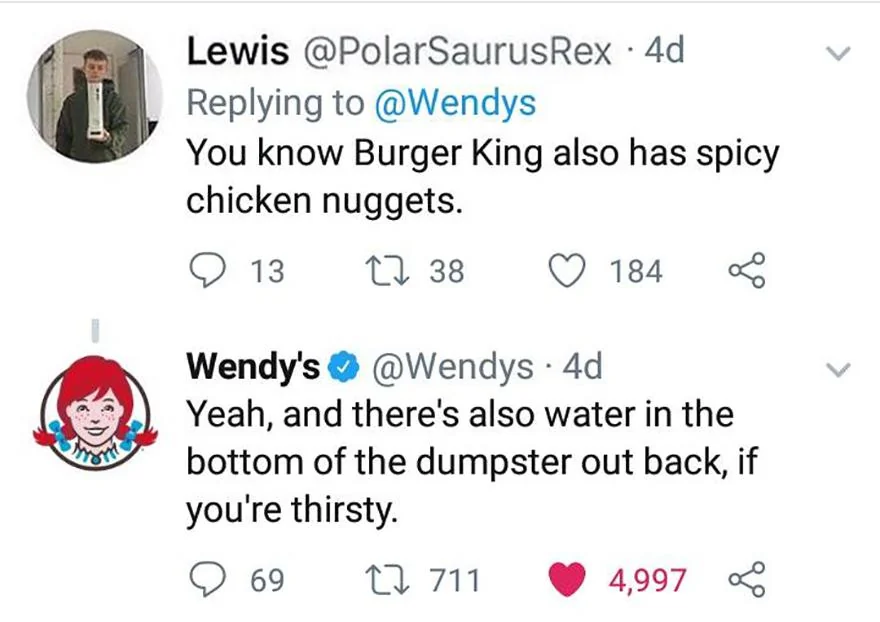
The problem with all of this is that, while it was once novel and effective, the many copycats have caused this to no longer feel unique, and have arguably demonstrated why this was never truly “authentic” to begin with. Innovative and entertaining, yes. But authentic? I don’t think so.
How to craft an authentic brand voice
It may sound ironic on the face of it, the idea of “crafting” an authentic voice. How authentic can it be if you had to craft it?
But hear me out. I believe true authenticity for brands should be a natural extension of having a few key things in place:
- Well-defined values
- A strong USP (Unique Selling Proposition)
- A robust copy / style guide
If you are missing any of the above, or if they are not well defined, it’s likely your marketing will be less consistent, lower quality, more easily swayed by the trends and movements around you, and ultimately inauthentic.
[And for those who didn’t go to marketing or business school: a USP, or Unique Selling Proposition, is a concise description of what makes your product or service different from your competitors.]
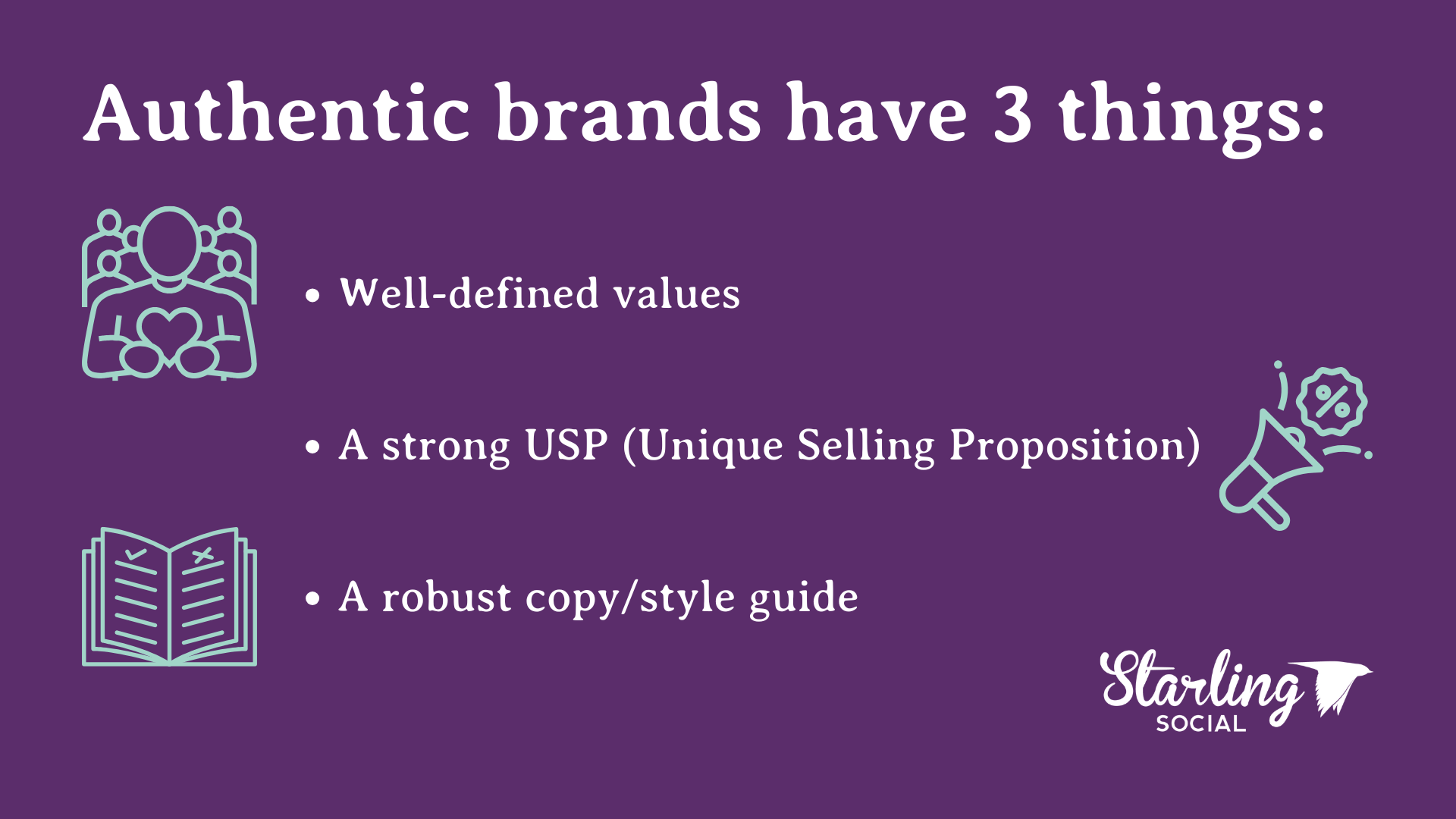
If you have the above, and have done them well, authenticity in marketing should become easy. Whether you do your own marketing, have an employee or team, or hire an agency (like Starling Social, for instance!), these things should act as a roadmap for marketing that feels grounded in everything that makes your business unique.
And that doesn’t have to mean weird. Some of the best marketing I’ve seen has felt authentic simply because it’s real, it’s unique to the brand, and it isn’t trying to be anything it’s not.
Why authenticity beats marketing perfection every time
If the backlash to AI in digital marketing can teach us anything, it’s that most people can smell marketing that is inauthentic.
We even see research bear that out. Companies like Meta conduct regular user surveys to test ad recall, and even ads that do everything “right” will have a substantial number of people scroll right past, quickly forgetting what they saw.
We don’t have the data to prove why someone can’t recall a given ad because, well, they forgot it already. But we know that authenticity gets attention and increases retention and conversion, especially among younger audiences.
A survey from Stackla found that 90% of Millennials say authenticity is important for them when deciding what brands to buy from. And they’re not alone – 85% of Gen X respondents said the same, along with 80% of Baby Boomers.
Authenticity also builds brand trust, something that is both increasingly important and increasingly rare according to numerous studies. While the average consumer today has lower trust in most companies and institutions than they did in decades past, they value it more and will reward those companies which earn and keep that trust.
Another thing consumers care about now more than ever before is supporting brands whose values align with their own. That can be tricky, especially when your values might get mixed up in politics and other touchy, controversial subjects. However, messaging that may exclude some customers can often be extra effective for attracting and retaining other, better customers.
A very basic version of this is the modern trend of ads that say something like, “our product isn’t for everyone,” or “our product isn’t cheap” – implying by exclusion that it might be just your kind of thing, or very high quality. This can be very effective – although beware being the late copycat using a trope that your customers have seen too many times.
How can we help?
If you could use help finding your brand’s authentic voice, or using it to create great marketing, we are here for you.
Whether it’s a one-time brand audit, help with a specific campaign, or ongoing management of your social media channels, Starling Social has the team and tools to elevate your digital marketing into something truly authentic, and truly effective.
Get in touch today and let us know how we can help.
Is Bluesky Worth It For Small Businesses?
- by Luke Thiessen
The social media platform Bluesky just passed its one-year anniversary of being open to the public last month, and while its chart-topping run of a million new users a day has subsided, the platform is continuing to grow.
As marketers, we are always watching new platforms to see which ones might survive their startup phase and become part of the mainstream – and, more importantly, which ones are worth joining and investing time in.
Is Bluesky worth it for small businesses? The short answer, as with many things, is probably “it depends.” But by learning about how Bluesky works, how it’s different from other platforms, and who its users are, we will try to make some use cases for it and determine if it’s right for your business specifically.
And if you don’t know the first thing about Bluesky, that’s OK, because we’ll start with the basics.
What is Bluesky?
In a nutshell, Bluesky is a “microblogging” platform similar to X (formerly Twitter). It started in 2019 as a project within Twitter, when founder Jack Dorsey announced Bluesky as a possible way to decentralize the platform and give users more control over their privacy, algorithms, and overall experience.
Eventually, Bluesky was incorporated as a separate company, Twitter was acquired by Elon Musk (who changed the name to X), and the two became fully separate. Bluesky launched its own app, which went from invite-only to fully open in February of 2024. And by November, user growth reached a peak of more than a million per day.
Technically, what makes Bluesky most unique is how it was built to be decentralized, which we won’t get into here. But Bluesky is unique in a few other key ways too:
- No advertising or paid features
- No base algorithm (feed is chronological)
- No live video, just text (300 characters), and uploaded photos/videos
- Open-source
Being open-source, the platform also allows users to create (or take/share/use) custom algorithms and other tools to manage their own feeds and experience on the platform.
Ultimately, Bluesky remains less than one-tenth the size of X (formerly Twitter), but where X has been losing monthly active users steadily for several years, Bluesky continues to grow, and has been developing its own niches, communities and culture.
The argument AGAINST Bluesky for your business
If you have been on Bluesky yourself (which I do encourage – it’s easy to try out), you’ll notice a distinct lack of anything corporate or marketing-related. Not many businesses have jumped to Bluesky, and those that have largely seem to be parking usernames without committing to posting or engaging. The lack of ads contributes to this feeling as well.
While we don’t have good data yet, the attitude toward businesses on Bluesky so far seems to be developing similarly to Threads (and, if your memory goes back this far, Twitter in the early years). That is, if you are willing to use the app like the locals, post content that fits the community you’re in and engage with it, you’ll do just fine. But simply re-posting your Instagram and Facebook content here will not get you very far.
This may mean more effort than you’re willing to put in, and that’s OK. The userbase is still small (about 30 million worldwide), and most users on Bluesky are not expecting to be keeping up with their favourite brands and businesses on the platform anyway.
.png)
There’s also the matter of demographics. Your target audience may just not be on Bluesky in any real numbers. The company has not published its own statistics, but third-party data suggests that the user base skews fairly young (42% are aged 18-24), heavily male (64%), politically left-leaning, and geographically concentrated in a few specific areas (mostly the United States and Brazil).
However, there are some specific use cases for Bluesky, and if you’re willing to put in the time, you just might be rewarded.
The argument FOR Bluesky for your business
Firstly, and perhaps obviously, if your target audience is progressive young men in the United States and/or Brazil, you might want to consider Bluesky. But beyond that, there are some more broadly useful ways in which the platform might make sense for you and your business.
1. Thought leadership and networking
While it may not benefit your business to be on Bluesky as a brand, having an account for yourself (or whoever else) as the public face of the company could be a good fit. Bluesky is filled with young, educated professionals who may be good connections as future B2B customers, employees, business partners or investors. If you are already active on LinkedIn or creating any kind of thought leadership content, this might make sense to repurpose for Bluesky (although remember the character limit and format differences!).
2. Media connections and outreach
One group that is very well represented on Bluesky, even in Canada, is journalists. Many have fled X and have redirected their followers to their Bluesky accounts. This may be another use case for joining the platform, not as brand social media, but for you to find and connect with journalists for potential media outreach.
3. Niche communities
Like every other social media platform, Bluesky is quickly developing its own niche communities, and you may find that your business has a natural match in one of these. Unlike Reddit communities, there is no formal structure for this on Bluesky – but with a little digging, you might find a thriving niche to join. And if it doesn’t exist yet, the platform is still growing – it might exist soon.
Any further questions?
If you are curious about leveraging Bluesky for your business, need help managing your social media and digital marketing, or just need some good advice on how to get the most out of your online presence, we’re here to help. Whether it’s a brand audit, social media management services, or training for your existing team, we love working with businesses and nonprofits of all sizes to achieve your digital marketing goals. Get in touch - let’s chat!
25 Instagram Reels Ideas to Grow Your Business
- by Alicia Kurz
A common theme between most of our clients is that they don’t want to film Reels. And, we understand the hesitation. We’re also working from home, often in our cozy clothes, and our Reel filming days require a lot of prep. Organizing Reel days for our clients typically include a lot of poking (ok, nagging), to get it done, but it’s part of the job, and the payoff is worth it.
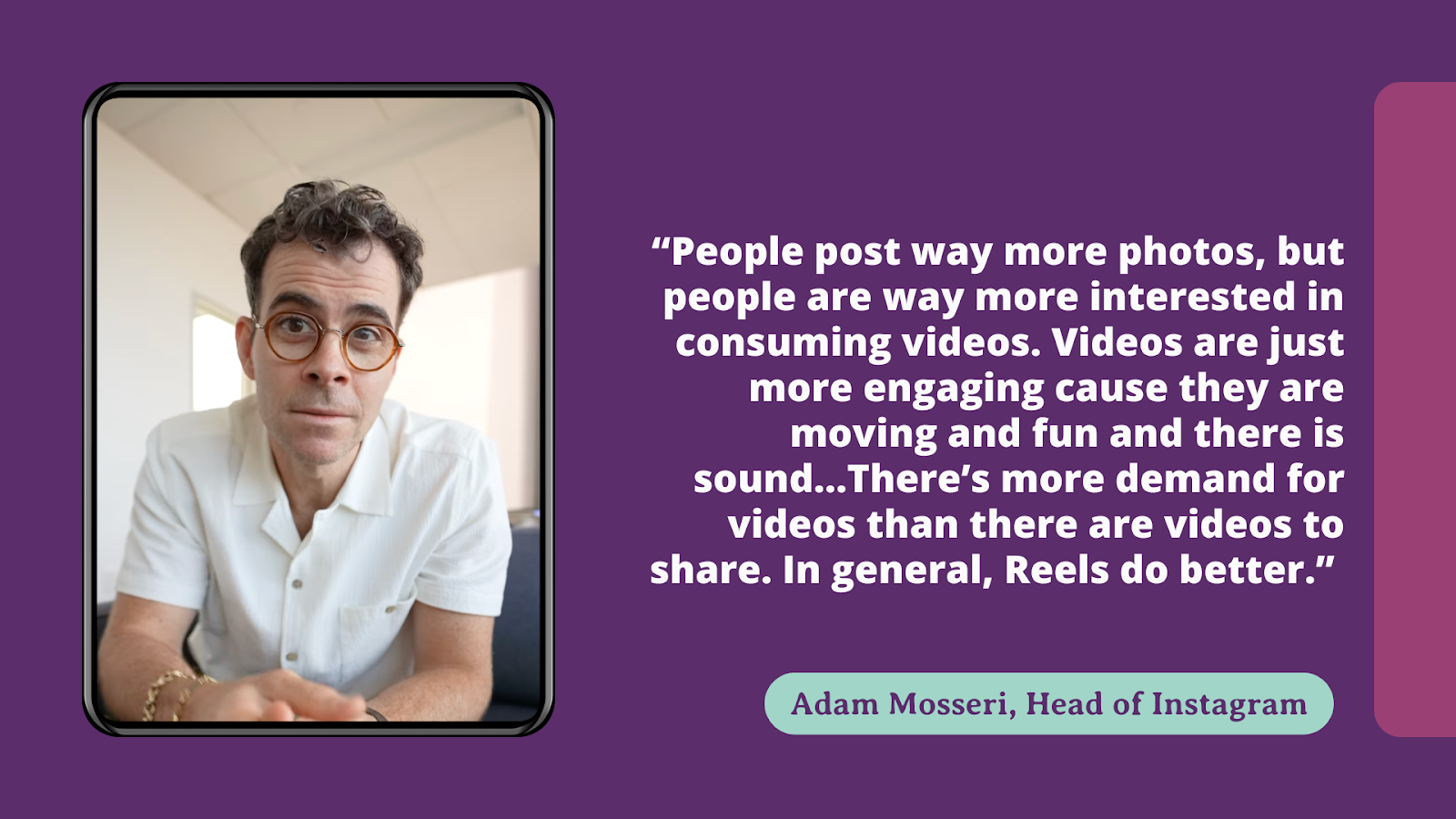
That’s straight from the horse's mouth, people! Reels do better than other content.
We Hear This All The Time…
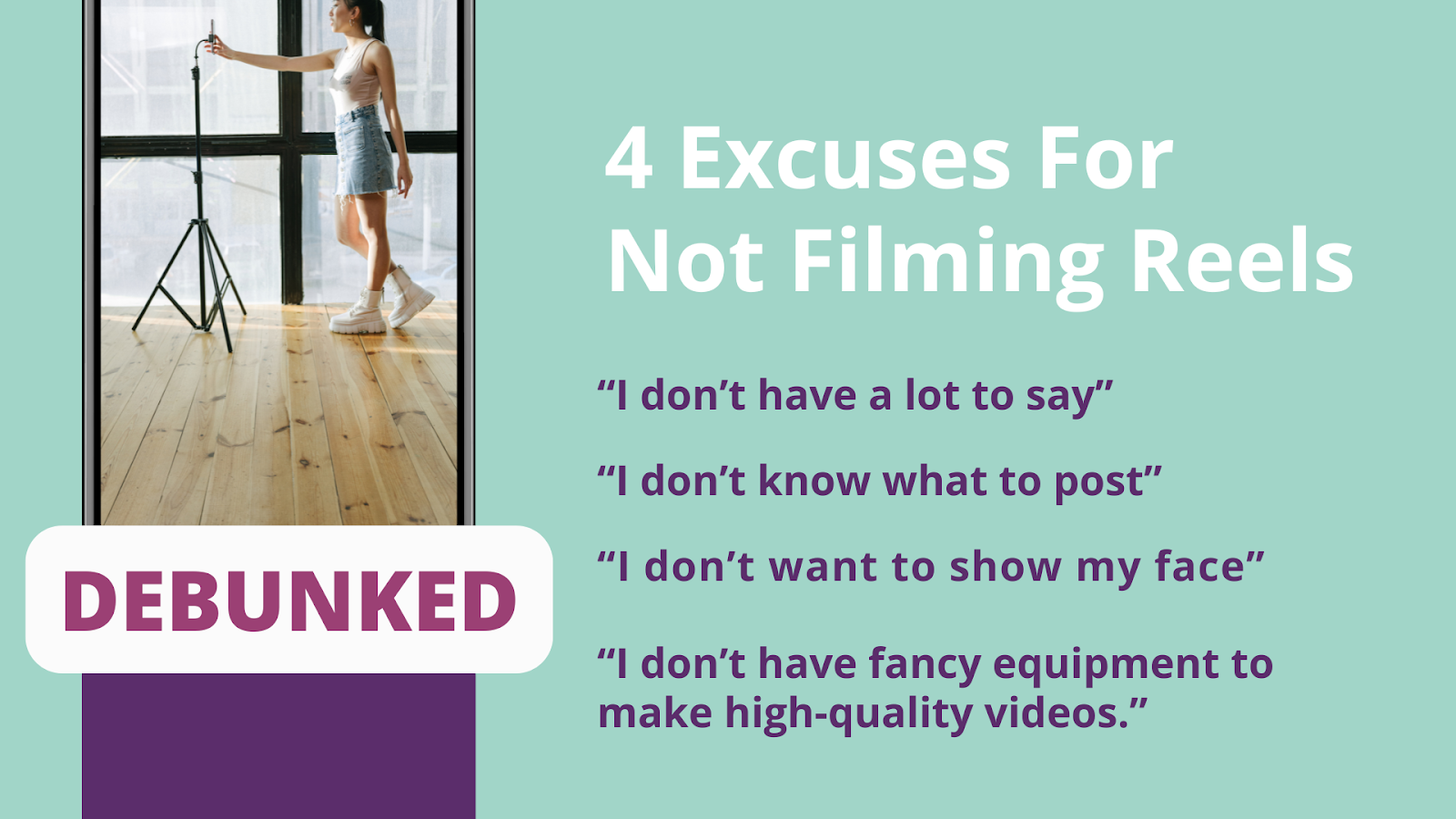
“I don’t have fancy equipment to make high-quality videos”
You don’t need it.* Period.
Instagram wants to show you what you’re interested in seeing. Nowadays, people are sick of the “picture-perfect” videos and endless highlights of your business, so if you want to connect with your audience, the best way to do that is through authenticity and transparency. That means showing the messy middle.
Okay, if your lighting is truly terrible, consider grabbing a $30 ring light on Amazon and that will do just fine. Otherwise, natural light can do wonders.
Mosseri even has a recent Reel titled Production value doesn’t matter and says, “Too often creators are worried about production value…If you’re trying to create relatable content, production value is almost like an anti-goal.”
@haleyybaylee, the kind of problematic, yet hugely successful content creator (you know, the one who was dressed as Marie Antoinette at the Met Gala and told people to “let them eat cake,” among other things) was featured on this Reel and said she posts videos that she would send to her group chat.
Putting aside the few TikTok and Instagram scandals she’s been involved in, what she’s doing to grow her following is working.
*This section is not for you if you’re promoting a luxury brand. In that case, you do need fancy equipment to make high-quality videos.
“I don’t have a lot to say”
You don’t need to say a lot! Instagram wants short-form videos. Mosseri even spelled out why in another recent Reel:
When you watch long-form videos, you see less of other content. That means you spend less time liking, commenting, saving and sharing. Since Instagram wants you to spend more time on their app, and engage with more content, long-form videos would work directly against their objectives.
The head of Instagram said specifically, “Instagram will not focus on long-form video.” Their goal is to connect you with friends and help you explore your interests — usually through short-form videos.
This is a hot take from Instagram, considering TikTok is expanding into longer videos.
“I don’t want to show my face”
Instagram posts with faces get 38% more likes than those without. Do with that information as you will, but you also don’t HAVE to show your face.
There are plenty of faceless accounts, and you can show behind-the-scenes things like how your product or service works, showing processes, customer reactions, time-lapses, etc. The options are endless.
“I don’t know what to post”
That’s why you clicked on this blog post, silly! When we show up to Reel filming days with our clients, we have Reel ideas prepared, props and scripts ready, and it’s a fun and easy day.
However, you might be doing your own socials, and we’re here to help with ideas for that, too.
25 Reel Ideas
Show Your Workspace
Anyone can participate in this! From at-home desks to warehouses to restaurants. These behind-the-scenes glimpses remind your audience of the work that goes into your business.
Step By Step Videos
These are great for recipes, companies to make items, or “how to” videos. Having a visual element makes “doing the thing” more accessible.
Showcase New Products
Get creative with how you show off your new products. Search the Explore Page for inspiration — this creator has the right idea!
A Day In The Life
There are many examples of these type of Reels, but if you’re camera shy, this is a good faceless option!
Testimonials
Have your clients share short video reviews of your product. If your clients are camera shy, ask them to write a testimonial and you can share them in a similar style as this creator.
Dance
Choreographed dances aren’t really our thing, but they are never leaving the app. If you can master the moves, shake what your mama gave ya!
Introduction
Introductions and reintroductions are all over the gram. It’s a chance to give new followers a better idea of who you are.
Meet the Team
These don’t need to be complicated. Making a meet the team post into a Reel, instead of a photo, is a more engaging way for people to get to know your staff.
Time Lapse Videos
Thanks to these apps, we’re all impatient. That’s why it’s so satisfying to see a project happen from start to finish in less than 90 seconds.
Celebrate a Milestone
Always celebrate your wins! Plus, telling your audience about your significant milestones is another way to add credibility to your business. Is this post, Alyson shares some valuable lessons she’s learned in the last 10 years of owning a digital marketing agency.
The “Making Of” Videos
Jenna Rae Cakes is a great account to go to if you want to see how to make their delicious desserts. Will we ever make a fancy cake? No. Do we ever skip a video? Also no.
Share Your Favourite Products, Services, or Tools
You’re the expert in your niche. Your audience would love to know what your favourite things to use are.
Unboxing Videos
Small businesses have to order products all the time. This allows plenty of opportunities for unboxing videos, like this one from WillowPress.
Explainer Videos
We’re just going to tag Molly PcPherson’s entire account because her whole page is explaining PR crisises. However, you can explain your products or services, or even your company culture.
Educational Videos, But Make It Fun
The TSA account is hilarious, but also shares information that travellers would definitely find useful. Check out this example from a couple of years ago, but their account is awesome in general.
Copy Trends
Don’t hop on every trend, but if it works with your brand, definitely do it. Here’s a current popular sound that most businesses can relate to.
Remix Reels
Trigger warning: this one is heavy. It’s also relevant and important to women's health.
We will give a special shoutout to the KamalaHQ account because they are working at lightning speed to stay relevant on all platforms. Truly unbelievable work.
Tell A Story
The Fingernails Are Pretty account slays at keeping things genuine. Her followers love her because she shares her products in an unconventional way, and it’s relatable to a lot of people because *depression*.
Share Bloopers
Blooper Reels are so funny. If you want to make your audience laugh, consider sharing the slip-ups it took to get to the finished product.
Give Tips
We love a Canva hack, but any quick tips that an average person could benefit from are so valuable. We’ve learned so much on these apps over the years. Thanks for not gatekeeping!
Before and After
You can add two photos, put a transition between them, add audio and boom - a very satisfying before and after video is born.
Answer FAQs
This creator shares FAQs from her audience, giving some consistency in her feed, and it helps build her reputation as an industry leader.
Expectations Vs Reality Videos
You know what we’re talking about with these videos. So, we thought we would share the human version of Instagram vs reality videos with the Australian comedian Celeste Barber, who has built her page around the idea.
Share a Collage
The base of a lot of Reel templates are photos strung together to a sound. This style of Reel tends to get high views because they are short, and the photos go by quickly, forcing people to watch more than once to really see the photos.
The best, and worst part about Instagram is that it’s always evolving. It’s also a space full of creative people, so it’s a constant flow of ideas and inspiration that you can mimic in your Reels strategy.
Remember, the goal is authenticity and connection, so if any of these don’t feel true to your brand, don’t do it. But before we send you on our way, here’s a few other things to consider when posting Reels.
5 Hot Tips for Posting Reels
1. Think about making videos, and content in general, that people would want to send to their friends.
Instagram prioritizes Reels based on what it believes a viewer will be most likely to interact with, and uses a set of signals to help rank content. Sends are high on the Instagram ranking list — it means it’s content you want your friends to see.
2. Keep experimenting
This seems to be Mosseri’s consistent tip for people who are in View’s jail. Keep trying new things to see what your audience engages with.
3. Don’t post Instagram Reels that are low-res, blurry, have watermarks from other apps, or reposting others content.
These types of Reels will be deprioritized — meaning nobody will see your content.
4. Cover photos make a very minimal difference in Reels performance.
They are only seen on your feed, or on the Explore Page. Most of your reach comes from the Feed or Recommendations. So, if cover photos are something that’s taking up a lot of your marketing time, maybe it’s time to reevaluate.
5. Use Audio on your Reels
Audio makes the Reel more engaging. When your content is immersive, you are more likely to get more attention, which helps get more likes, comments, and a higher reach.
Using Audio puts your content on the Audio’s page. People go there for inspiration, where they could come across your Reel, giving you an even higher reach.
DYK 50% of people have their audio turned on when using the app?
As you can maybe tell, we love making content. Whether it’s writing copy, coming up with campaign ideas, or creating a Reels strategy tailored to your business — it brings us joy.
Let our team write, schedule, and promote your social media content for you. Contact us here for a free quote.
7 Holiday Marketing Campaigns For the 2022 Season
- by Alyson Shane
This post was written by our Account Manger Alicia Kurz.
‘Tis the season for holiday marketing campaigns. Sometime between Halloween and the first snowfall, businesses start rushing to capitalize on the spending frenzy that is the holiday season.
Consumers see holiday-themed social media posts, targeted ads, email marketing campaigns, billboards, tv ads, and the list goes on. It’s a lot to take in, but we’ve compiled a list of the most effective campaigns of holidays past and present to give you a little inspiration for your next campaign.
These brands have created campaigns that spread holiday cheer by evoking emotion and promoting sharing. Follow their lead to stand out from the white noise and make your brand stand out.
Google: Home Alone, Again
This ad will leave any Home Alone fans beaming. Thank you, Google for making us feel young again — even if it was just for a minute.
Why it’s effective
Nostalgia is a hell of a drug. It’s easier to appeal to a large target audience when you have a big budget to hire a celebrity, but anyone can use nostalgia to help amp up their holiday marketing campaign. What makes your audience feel good inside?
Coca-Cola Canada: Give Something Only You Can Give
When you see the Coca-Cola commercial around the holidays, you know it’s going to be good. Coke and Santa have been tied together since the 1920s, and their company even helped shape the image of Santa in the 1930s, so it makes sense for Coke to continue this tradition. While Coke definitely isn’t the drink we reach for around the holidays, the commercials still give us the warm and fuzzies.
Why it’s effective
The meaning of the holidays is to spend time with friends and family, not buy expensive gifts. Coke has become so tied to the Christmas season with Santa and those caffeine-guzzling polar bears it doesn’t even need to sell in its holiday ads anymore, making it a perfect ad.
IKEA: The Other Letter
This commercial might need a trigger warning if you are a parent. You WILL cry. IKEA Spain asked a group of kids to write two letters: one to the three kings (Santa equivalent) and one to their parents. No surprise to anyone, all the kids asked their parents for more time together. When the kids are told they can only send one letter, guess which one they choose…
Why it’s effective
Here’s another ad that doesn’t spend any time selling its product. The emotional impact this message leaves on their audience will last, likely creating more loyal customers in the future.
WestJet Christmas Miracle
Who doesn’t love a feel-good story, a little nostalgia, and happy families?
This campaign ran 8-years ago, but it still hits home. The WestJet team took on a sneaky project to perform 12,000 mini miracles during the holiday season. Their goal was to bring joy to over 13,000 people with the help of Santa and the WestJet staff.
We’re not crying — you’re crying! No, okay we are actually crying.
Why it’s effective
This campaign encompasses the spirit of giving. It was an act of kindness, and was completely random — which gives people watching the feeling it could have happened to them. We love how they used Santa to make their lists, and showed the hard and fast work WestJet staff had to do to pull off the gift giving. Imagine shopping for, wrapping and delivering gifts in just a few hours!
Plus, the kids' reactions definitely made us tear up.
TD Bank #MakeTodayBetter
We love a generous marketing campaign. TD Bank encouraged social media users to submit an idea for a project to help the less fortunate. They contacted 24 people, gave them 24 hours and changed 24 communities.
Why it’s effective
TD timed this campaign with the holiday season and changed the perception of its brand to a company that cares about giving back to the community. Their line “it turns out there are a lot of people with great ideas,” makes people feel like they will be heard at TD.
Apple: Make Someone's Holiday
Another ad catered to parents, but is extremely relatable: you need technology to keep the peace when travelling. The ad subtly shows the kids watching movies, colouring, and taking photos on the iPad, but the commercial takes a tear-jerking turn when the girls make a gift on the iPad for their grandpa.
Why it’s effective
The common theme throughout these impactful commercials is emotion. Apple typically focuses on function and how its products make your life better. Here they went for an emotional approach with the iPad as the centre of the story and it paid off.
Nick Offerman’s Yule Log by Lagavulin
I think we’ve cried enough already, so our last example ends on a high note.
If you are going to pick anyone to sell you scotch, I bet Nick Offerman is at least in your top 3. This ad is simply Nick Offerman sitting in a chair drinking Lagavulin for 45 minutes. There is also a 10-hour version! He doesn’t say a word. It’s somehow hilarious, soothing, festive and clever.
Why it’s effective
It’s an alternative to the classic yule log special and an instant conversation starter. The Parks and Rec star famously loved Lagavulin, so it’s an instant tie to the product, and it’s a simple idea that paid off big with over 3 million views.
Maximize Your Holiday Shopping Season
2020 saw a huge shift towards e-commerce sales from the pandemic. A Google survey showed that digital shopping has been cemented with 70% of surveyed participants stating their shopping experience would involve online touchpoints. At the same time, 80% of shoppers are seeking out in-person experiences.
This means making your marketing campaigns cater to both in-store and online shoppers!
With this in mind, communication is key. Make frequently asked questions readily available on your website and social pages. Engage your audience, don’t JUST sell to them. Remind them who is running your business and why you do what you do.
If you are looking for help getting your marketing campaigns off the ground in 2023, reach out to our team of professionals to help you get started here.